ŽeljkoObrenović
Executive Technology Leader | Chief Architect | CTO


Photo: Firat Aras
EXECUTIVE SUMMARY
- Pragmatic technology executive with 25+ years of experience leading large-scale architecture, platform modernization, and organizational transformation across global, multi-brand enterprises.
- Proven record of bridging strategy and implementation, unifying technology landscapes, driving cost savings, accelerating innovation.
- Hybrid leader—part technologist, strategist, researcher, and people leader—trusted to deliver clarity and impact in complex, high-stakes environments.
CORE LEADERSHIP STRENGTHS
- Enterprise & Solution Architecture Leadership
- Technology Strategy & Transformation
- M&A Technical Due Diligence & Integration
- Cloud, Data, & Platform Modernization
- Engineering Culture & Organizational Design
- Cost Optimization & FinOps Strategy
- Innovation: AI, VR, Data Analytics
- Cross-functional Leadership (100+ teams)
MY (GROUNDED) PLAYBOOKS
Career Overview
Other Profession Highlight


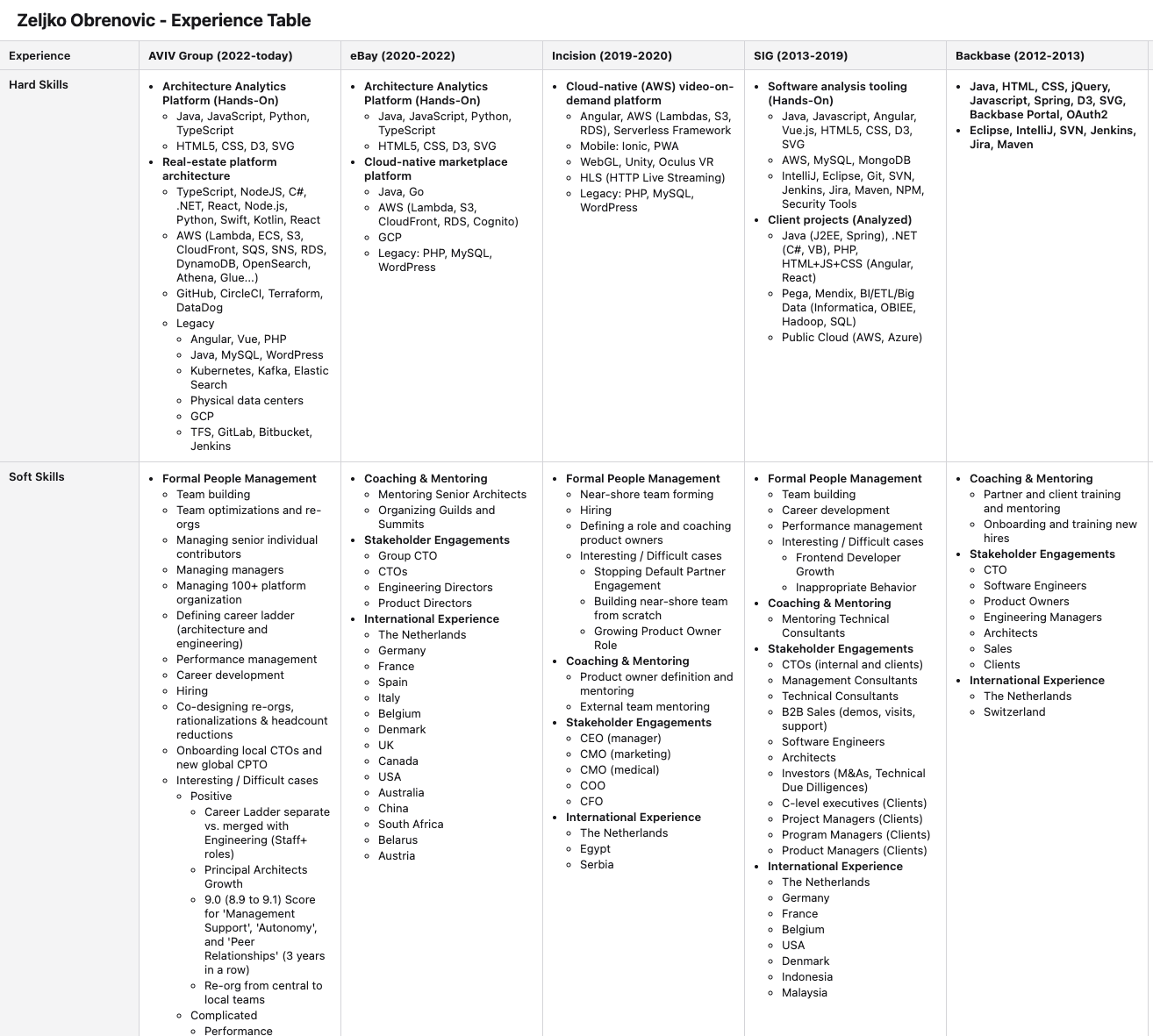


Talking points: career progression, people management, strategy
Key points:
- I am not simply an experienced architect moving into executive leadership. I am a technology leader who has built teams, owned delivery, influenced global strategy, led large organizations, and delivered measurable transformation outcomes.
- What I enjoy most is bringing business strategy, technology, and people together—and turning that into measurable results. That's what I'm looking to do in my next CTO role.
- The consistent thread throughout my career is especially clear: I move toward opportunities to build, transform, and lead—and I adapt responsibly when the business needs to take a different direction.
I've spent more than 30 years in technology, moving from software engineering and research to technology strategy, organizational leadership, and large-scale transformation.
Strong Foundations
I started as a software engineer in the mid-90s, freelancing while studying at university. I loved building things, solving complex problems, and exploring new technologies.
I deliberately spent my early career developing strong technical foundations. Alongside engineering, I started teaching and mentoring, discovering an interest in helping others grow that has stayed with me ever since.
After about a decade, I moved into academic research at CWI in Amsterdam and TU Eindhoven, focusing on interactive systems and data visualization, including collaborations with Philips and TomTom.
Research shaped how I approach problems: by challenging assumptions, seeking evidence, and considering different perspectives. And provided me with a very strong foundation that enables to quickly grasp new technology developments. But I missed the direct impact of industry, so I returned, first to Backbase and then to Software Improvement Group.
Consultancy
My six years at SIG were a turning point.
I worked with more than 50 organizations, advising CTOs on technology strategy, modernization, and technical due diligence for acquisitions.
That gave me a rare opportunity to observe why technology organizations succeed or struggle. I learned that sophisticated technology doesn't necessarily produce better outcomes. Success depends just as much on clear priorities, sound decisions, and effective organizations.
It was also where I moved into formal people management, shifting my focus from solving technical problems myself to building teams capable of solving them.
In the Driving Seat
CTO @ Incision
My next step was becoming CTO at Incision, a surgical education technology company.
For the first time, I had direct accountability for technology strategy, organization, and execution.
I helped define a modular product strategy covering video education, assessments, certification, and hospital processes. We built a nearshore engineering team of around 20 people, strengthened internal product and technology capabilities, and established partnerships for specialized innovation, including AI and VR.
We delivered a new video-on-demand platform in six months, creating a foundation for further innovation in hospital processes.
As the major development work was completed, the company decided to shift toward maintenance and outsource development. It was a reasonable business decision, but I was more interested in continuing to build products and develop internal engineering capabilities.
eBay Classifieds and Adevinta
That led me to eBay Classifieds and Adevinta as a Principal Architect, where I had the opportunity to work at a much larger, global scale.
The challenge was aligning established brands and engineering organizations around common technology priorities.
I helped drive technology consolidation, legacy reduction, quality standards, and cost discipline. We established a virtual architecture organization and guilds, working with local and global CTOs to create shared direction while preserving local autonomy.
That experience strengthened my ability to influence without formal authority and drive change across complex organizations.
Following the merger with Adevinta, the organization gradually moved away from centralized technology functions. As the global architecture mandate diminished, so did the scope of my role. I wanted to continue working on group-wide technology strategy and transformation, so I looked for an opportunity with broader ownership.
AVIV Group
That brought me to AVIV Group, where I combined technology strategy, organizational design, and transformation execution.
A major ambition was to transform several country-specific real estate platforms into a pan-European platform.
I helped establish a capabilities-based approach that connected business objectives with technology investment and execution. We combined evidence from source code, cloud costs, delivery plans, releases, and product KPIs to make transformation progress measurable and transparent.
This created a common language across technology, product, finance, and executive leadership, connecting architecture and delivery decisions to investment, costs, and business outcomes.
More importantly, we translated strategy into measurable results: a 10% reduction in AWS costs, retirement of roughly 40% of legacy assets, and implementation of approximately 60% of the envisioned target platform.
Alongside the technology transformation, I helped design and restructure architecture and platform organizations across multiple countries. My leadership responsibilities expanded from individual contributors to managers and managers of managers, with an organizational scope of around 120 people.
I've led through hiring, career development, performance management, and complex reorganizations. I'm particularly proud of developing people who progressed into principal engineering, director, VP Engineering, and CTO roles.
I've also navigated difficult organizational changes, including voluntary departure programs, while maintaining operational stability and delivery capabilities.
Eventually, the business strategy changed. The pan-European platform initiative was stopped, central functions were wound down, and technology ownership shifted back toward individual countries.
I supported that transition, including reassessing which capabilities should remain shared and which should move to local teams.
It reinforced a principle I believe in: stay committed to business outcomes, not to a particular architecture or organizational model.
With the group-wide transformation mandate coming to an end, I decided it was the right moment to look for a new challenge—one where I could again combine strategic responsibility with building and leading a technology organization.
Summary
Looking back, three strengths define what I bring to a CTO role.
First, technical depth—the ability to understand complex systems, challenge assumptions, and make informed technology decisions.
Second, strategic and business judgment—connecting technology investments to measurable outcomes, whether that's reducing costs, modernizing platforms, or enabling growth.
Third, organizational leadership—building capable teams, developing leaders, and creating the conditions for sustainable execution.
Throughout my career, I've remained active in the engineering community through writing, open source, and IEEE Software. Staying technically curious remains important to me.
What I enjoy most is connecting business strategy, technology, and people—and turning that into measurable results.
That's what draws me to CTO roles: the opportunity to shape technology direction, build strong organizations, and take accountability for the business value they deliver.